
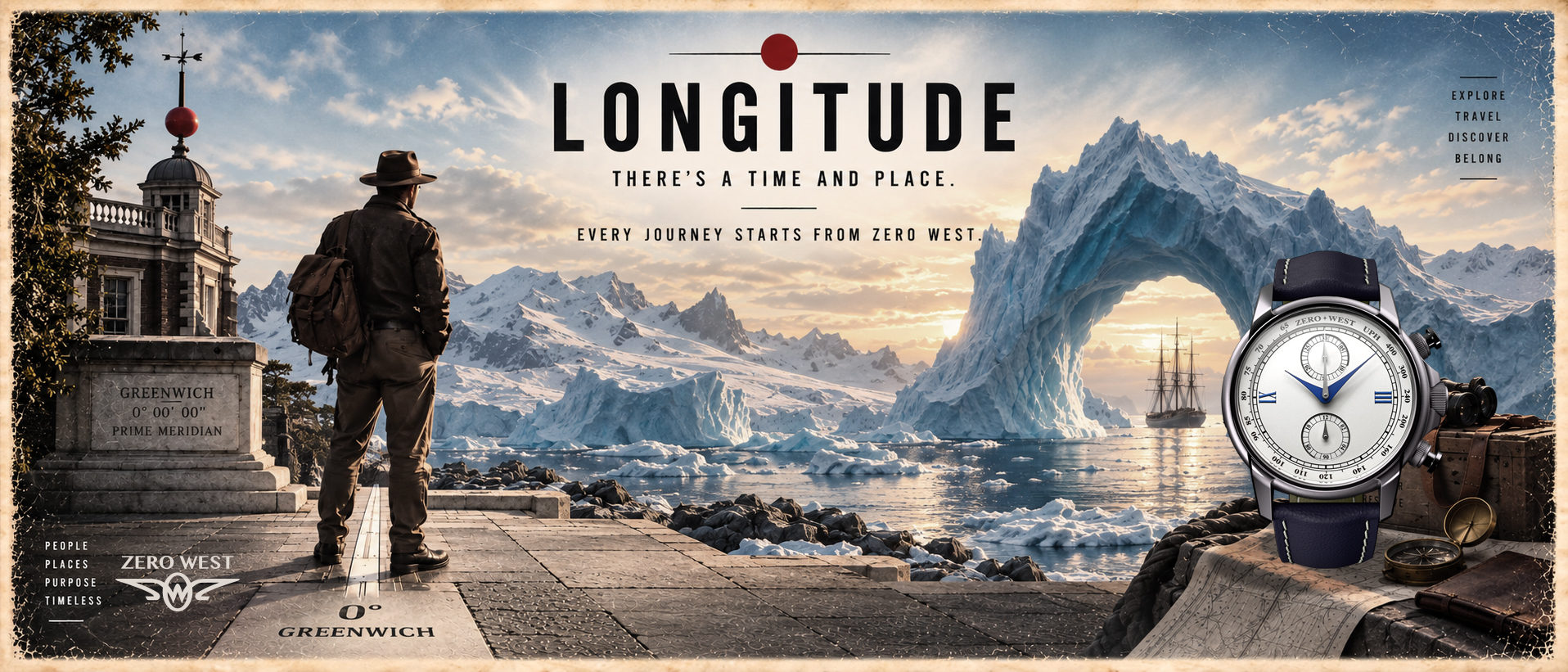
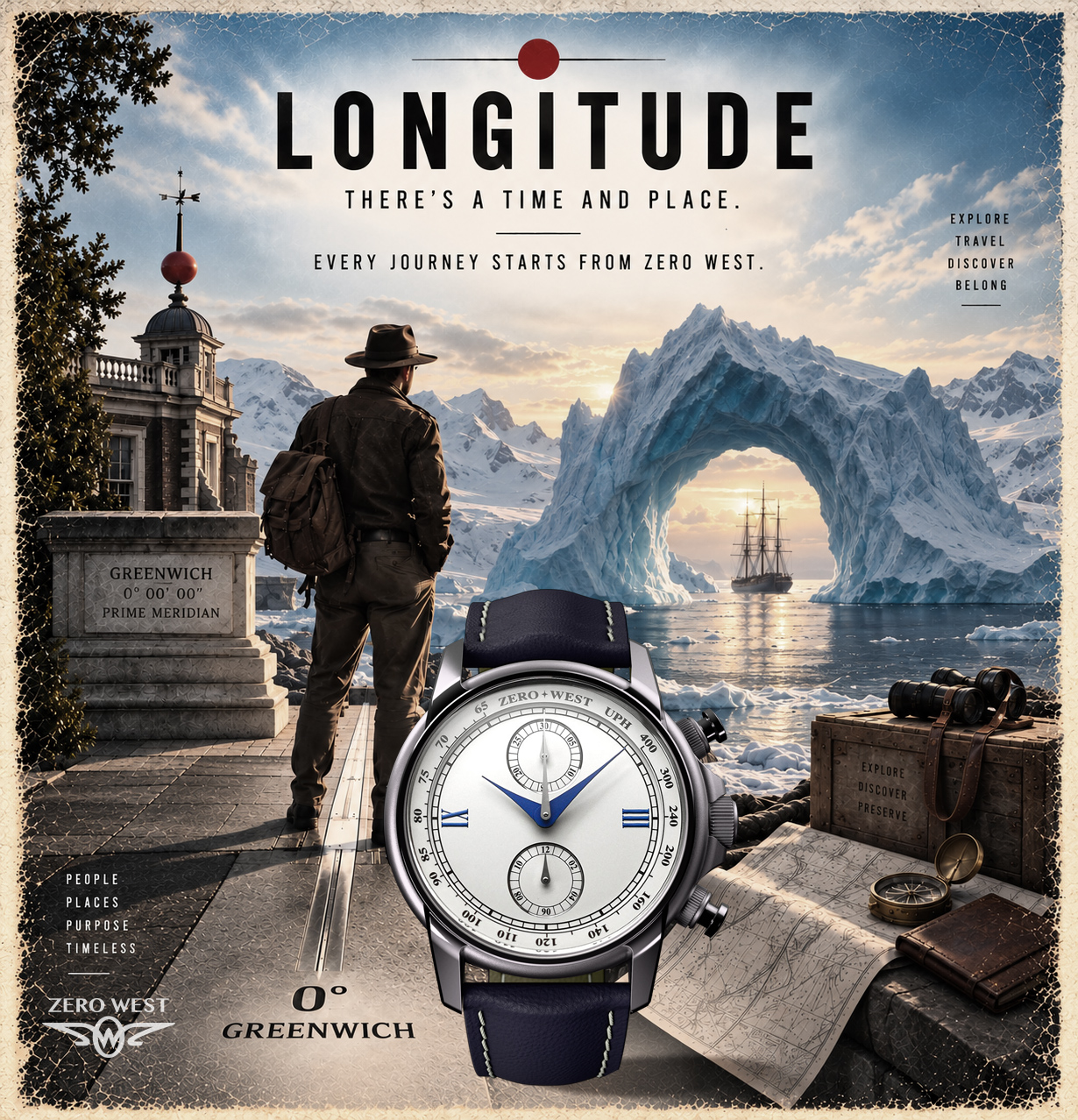
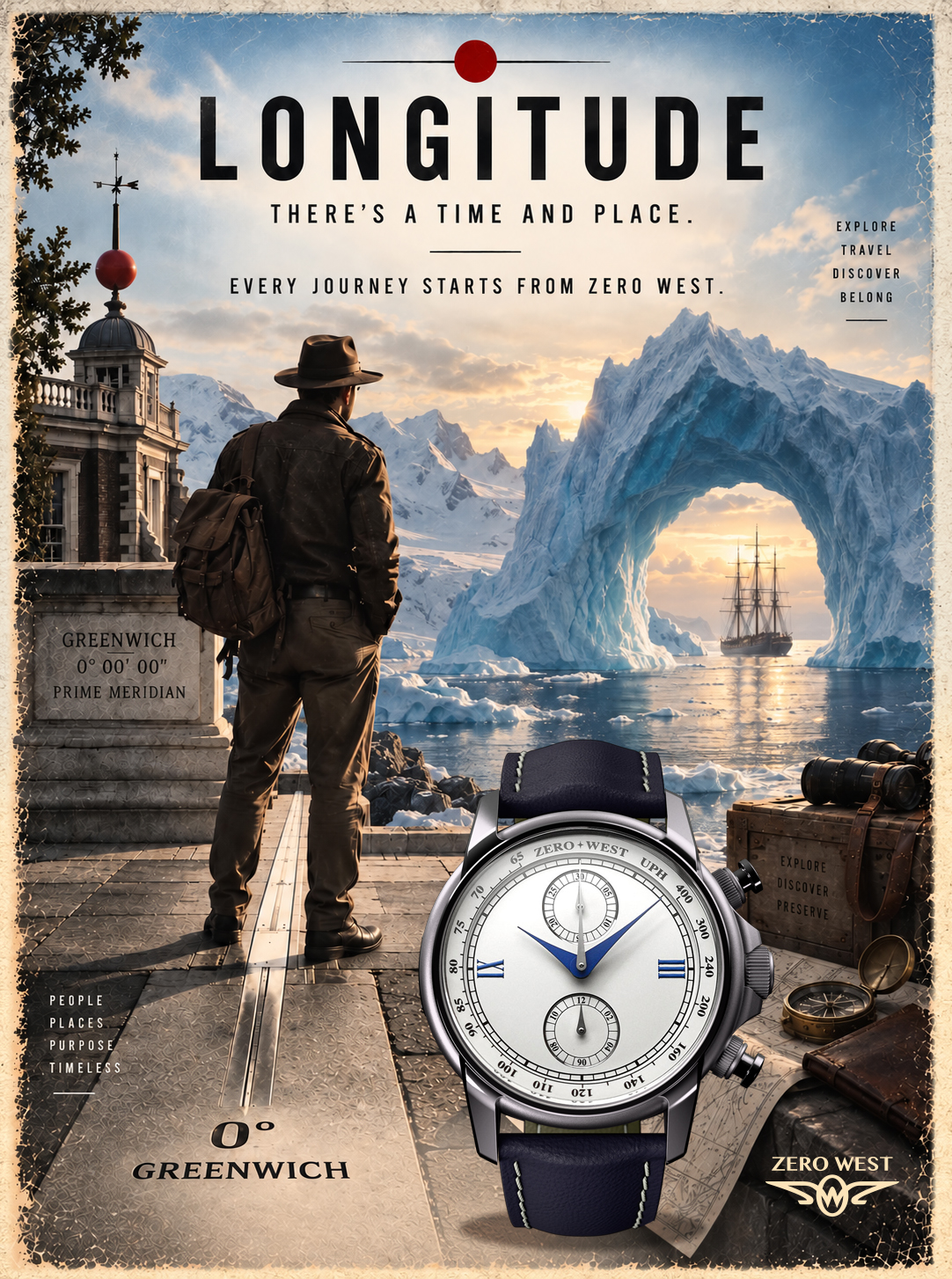
The Longitude collection goes back to the beginning of Zero West. Our original L1 was inspired by John Harrison’s extraordinary H4 marine timekeeper and the pursuit of accuracy that finally made longitude at sea possible. The L4 develops that founding idea as a contemporary mechanical chronograph.
WHAT CONNECTS GREENWICH, THE PRIME MERIDIAN, SPLIT-SECOND TIMING AND A TRAVEL CHRONOGRAPH?
MODEL:
L4 LONGITUDE
Dossier:
ZW-095 Travel Watch
Date:
22/10/1884
Coords:
51.48°N – 0.00°W
Size:
42mm
Origin:
Greenwich – Prime Meridian
Edition:
Limited to 50 pieces
Build:
Order and dispatched within 4 weeks
01
INSPIRATION & DESIGN
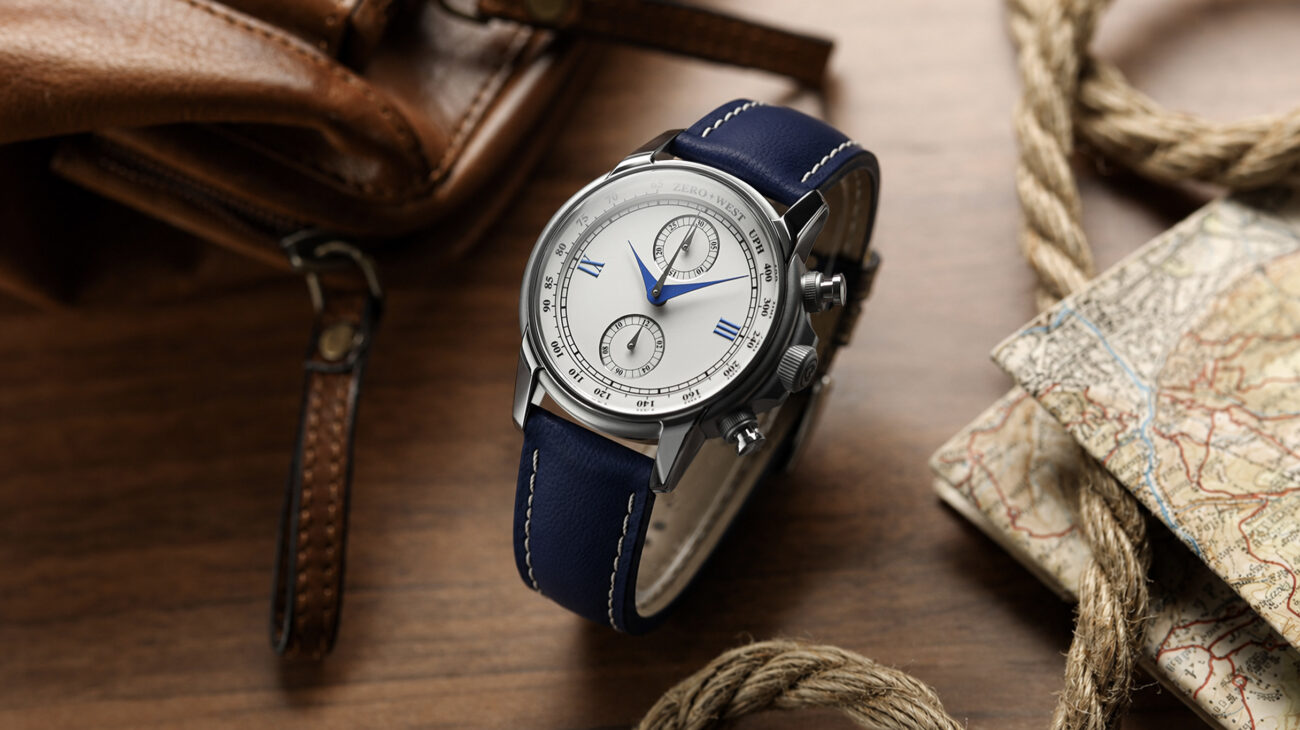
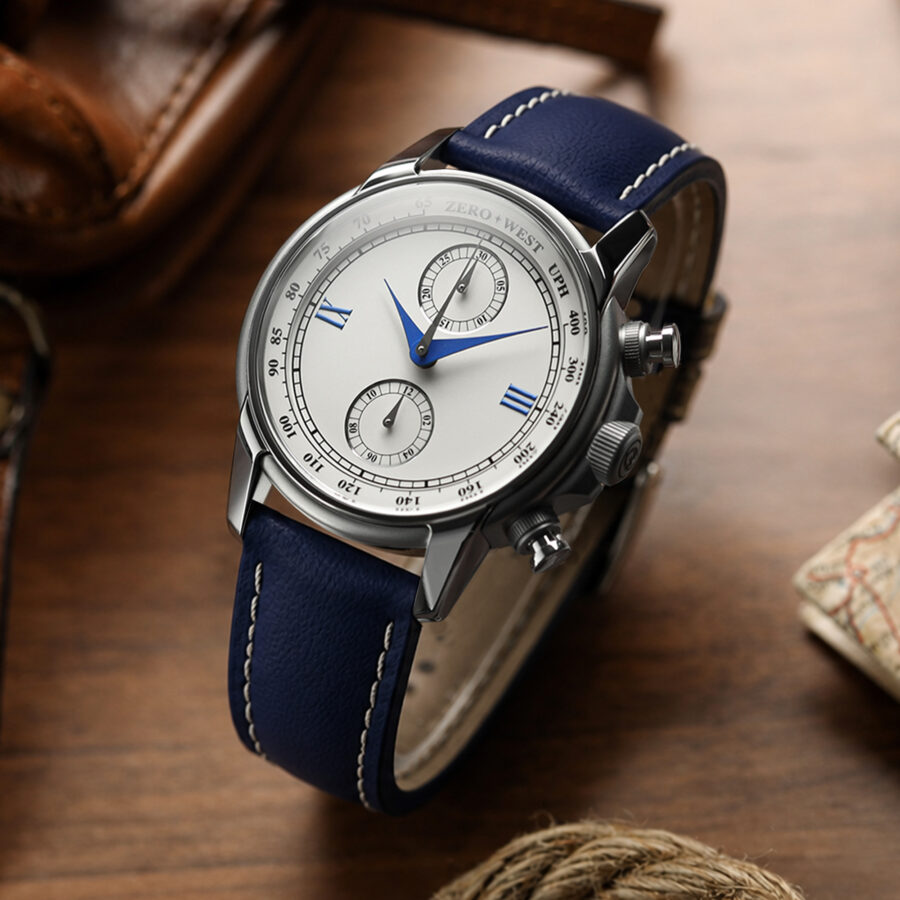
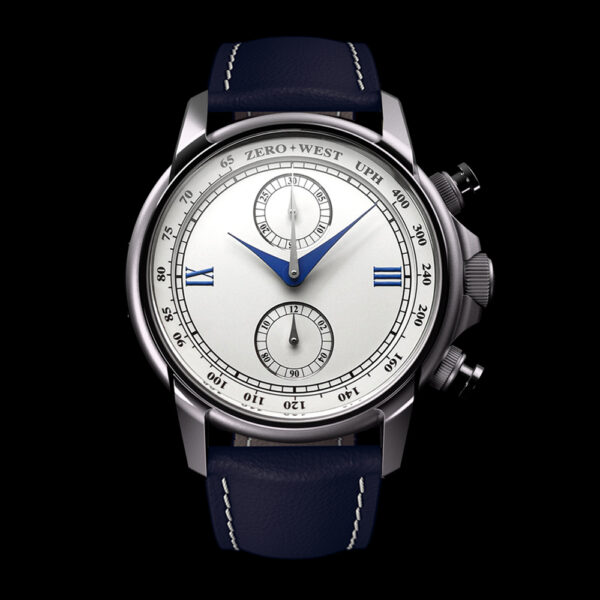
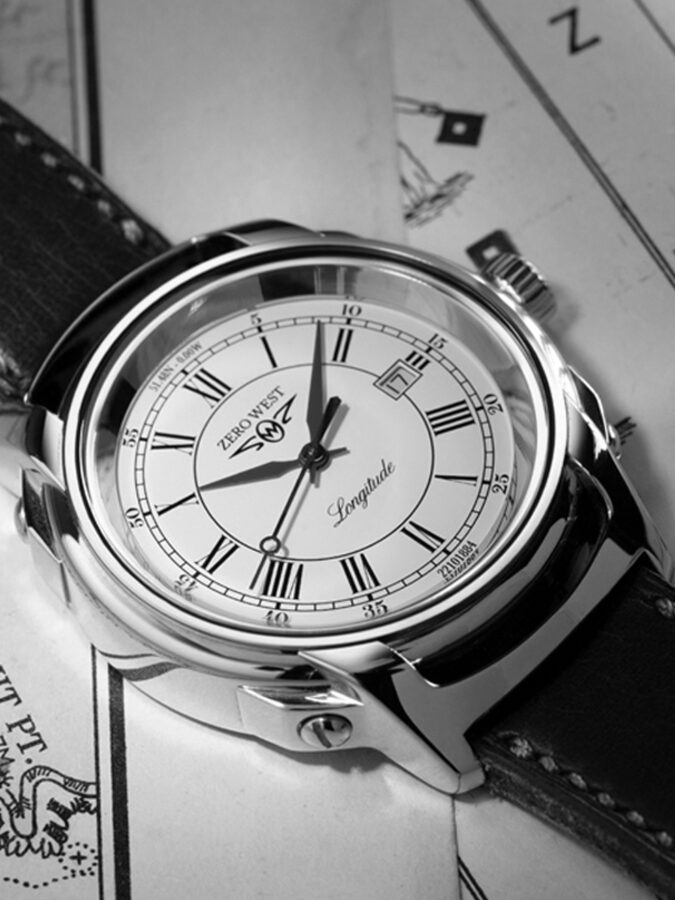
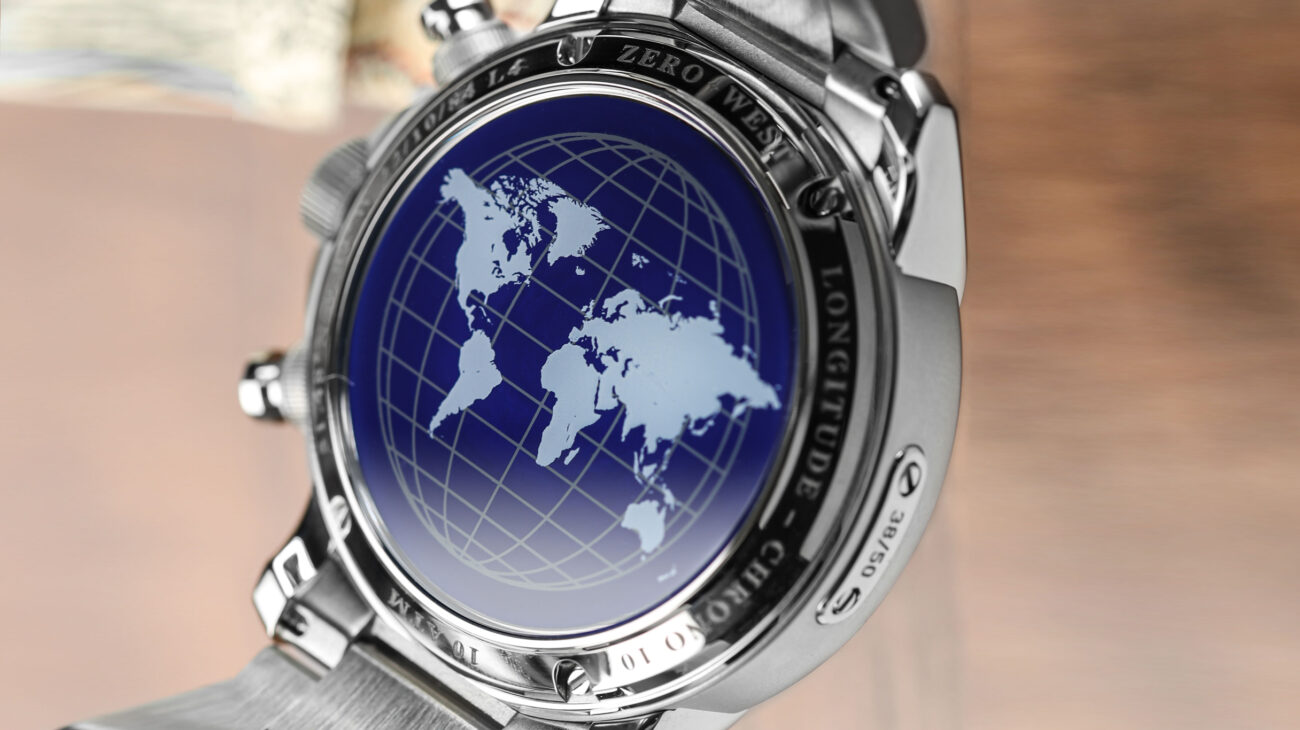
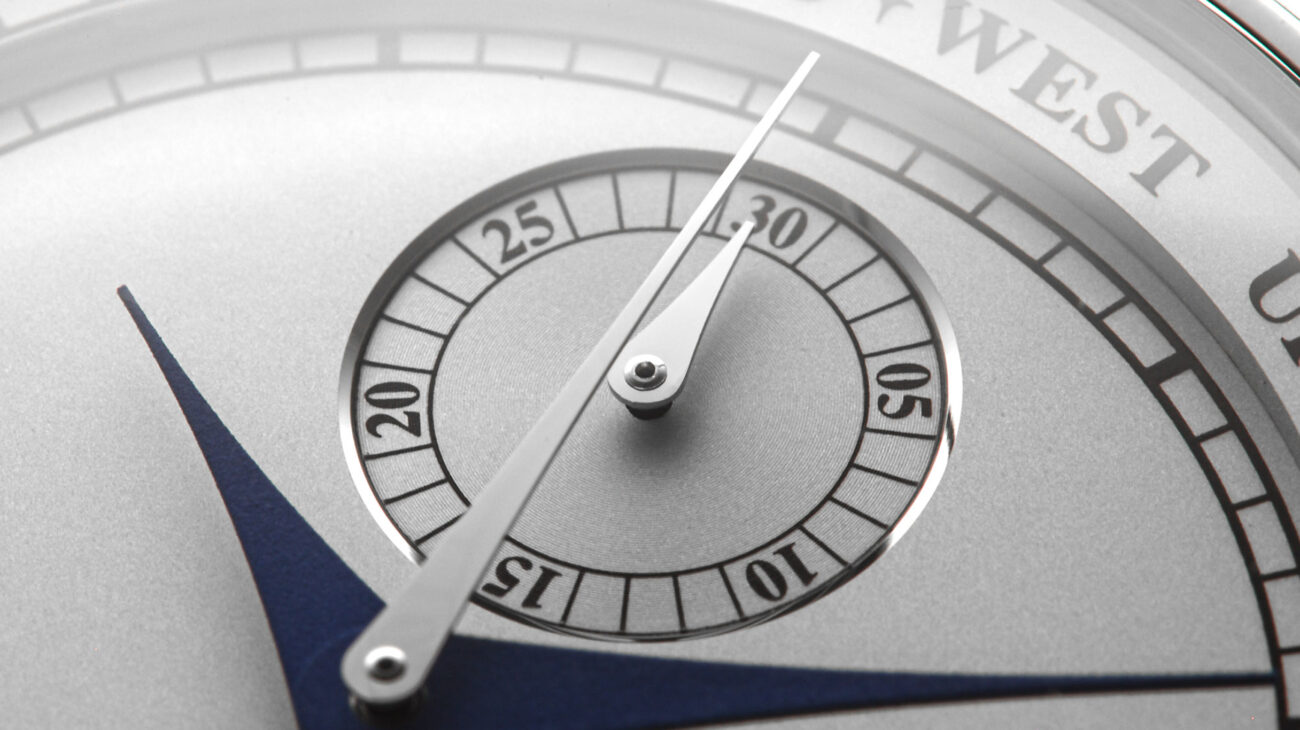
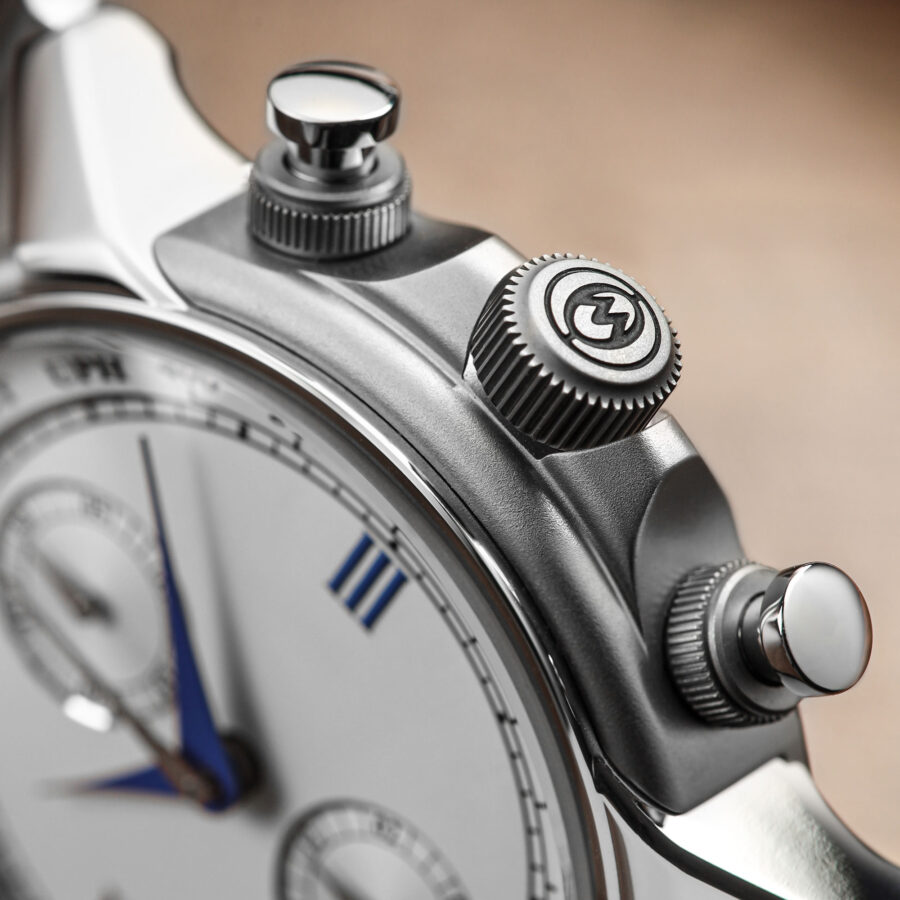
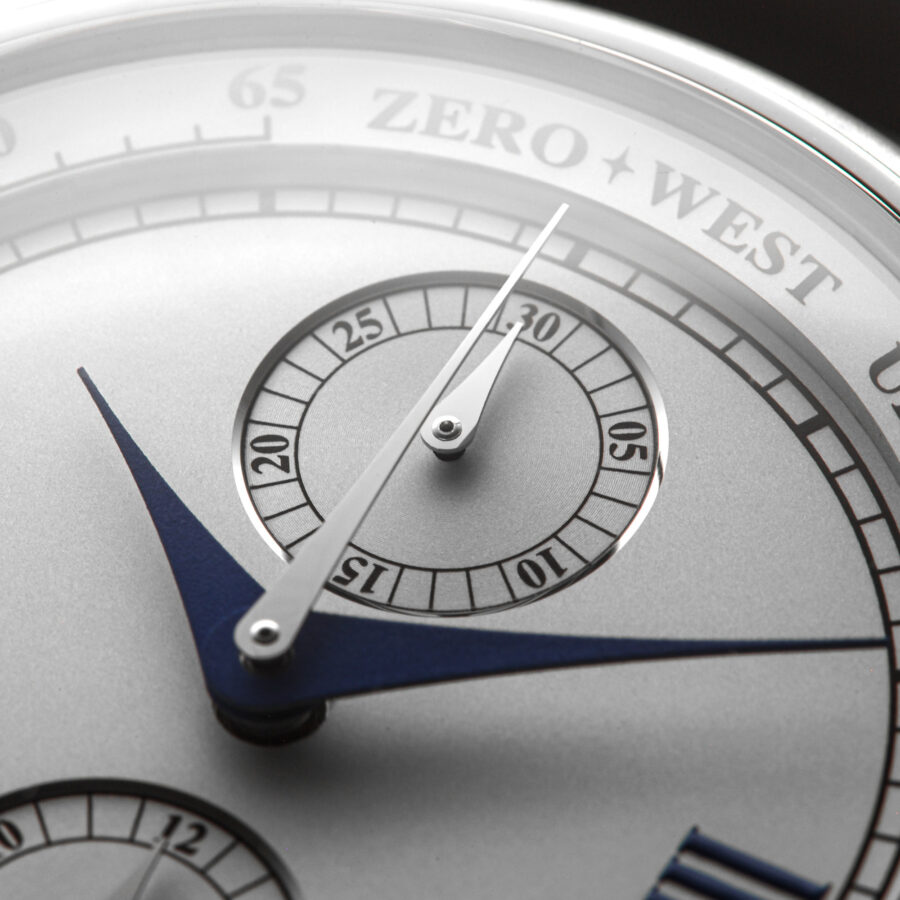
Its clean white dial, Roman numerals and blued hands make a deliberate reference to H4, while recessed chronograph registers bring additional timing capability without losing the clarity of the original concept. Coordinates locate Greenwich and the date code marks the establishment of the Prime Meridian — Zero Degrees West.
Like Harrison’s marine timekeepers, the Longitude story ultimately comes back to accuracy. Every L4 is regulated and tested in-house to our Chrono10 standard, bringing together chronograph functionality, contemporary Zero West engineering and a design lineage stretching back to one of horology’s greatest achievements.
02
THE HISTORY
THE LONGITUDE PROBLEM
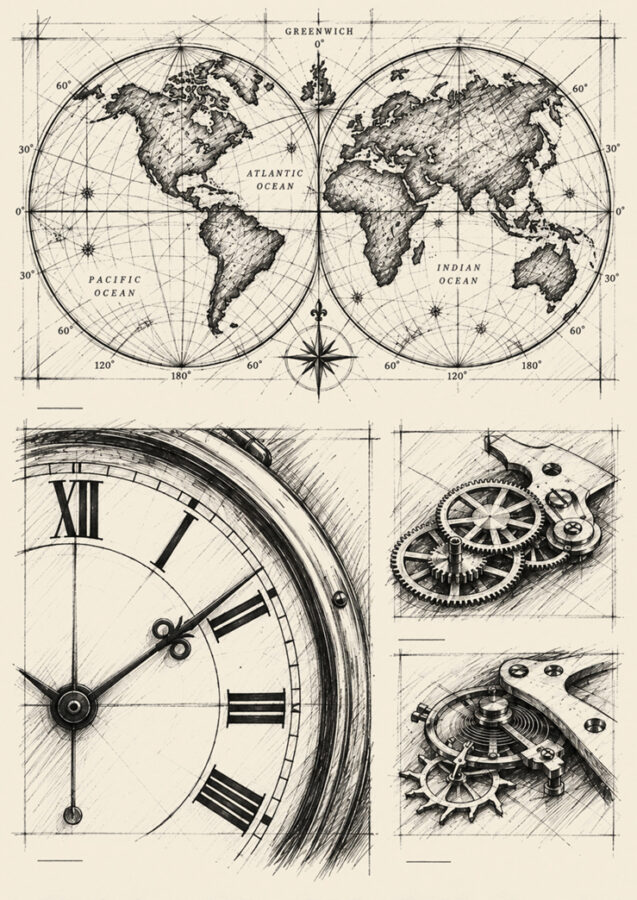
For centuries, sailors could determine latitude by observing the sun and stars, but accurately establishing their position east or west remained extraordinarily difficult. Without longitude, ships could be hundreds of miles from where their crews believed them to be — sometimes with catastrophic consequences.
THE LONGITUDE ACT
The need for a practical solution became a national priority. In 1714, Parliament passed the Longitude Act, offering substantial financial rewards for a method capable of determining longitude accurately at sea. The challenge would attract some of the greatest scientific minds of the age.
JOHN HARRISON
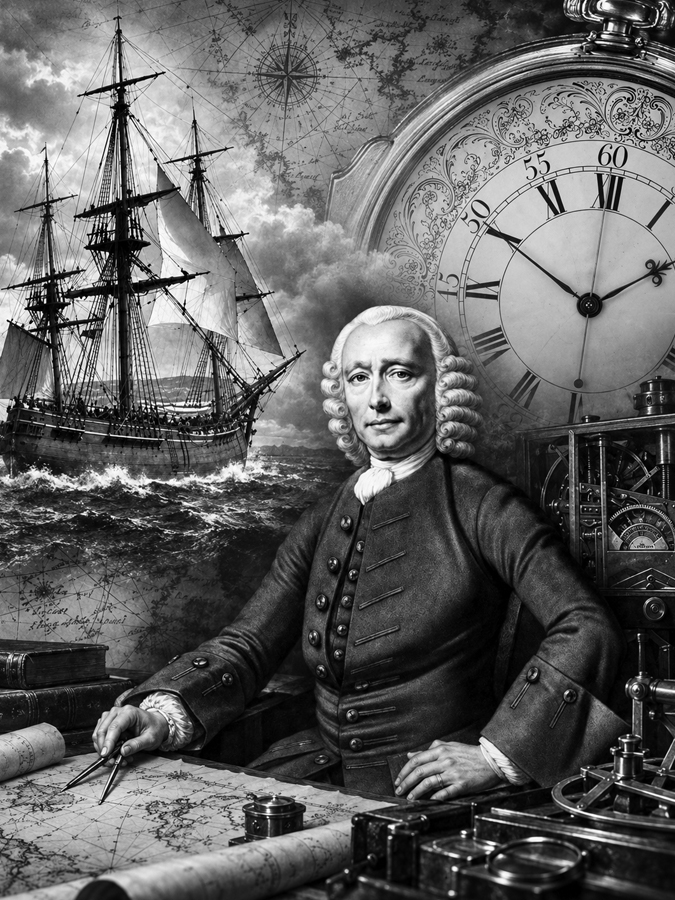
The man who ultimately transformed the problem was not an astronomer but a self-taught clockmaker and carpenter from Lincolnshire. John Harrison believed longitude could be solved mechanically: build a timekeeper sufficiently accurate to carry the time at a known location throughout a long ocean voyage.
TIME BECOMES POSITION
The principle was beautifully simple. Compare local time, established from the sun, with the time carried aboard ship from a known reference point. Every hour of difference represented fifteen degrees of longitude. The problem was creating a mechanical timekeeper accurate enough to make the calculation reliable.
H1, H2 & H3
Harrison devoted decades to the challenge. His first three marine timekeepers were extraordinary machines, introducing solutions for temperature, friction and the constant movement of a ship. Each advanced his understanding, but none would become the final answer he was searching for.
H4
Completed in 1759, Harrison’s fourth marine timekeeper was radically different. Resembling an oversized pocket watch, H4 used a fast-beating balance and represented the culmination of decades of experimentation. Its successful sea trials demonstrated that accurate portable timekeeping could finally provide a practical solution to longitude.
GREENWICH — ZERO DEGREES
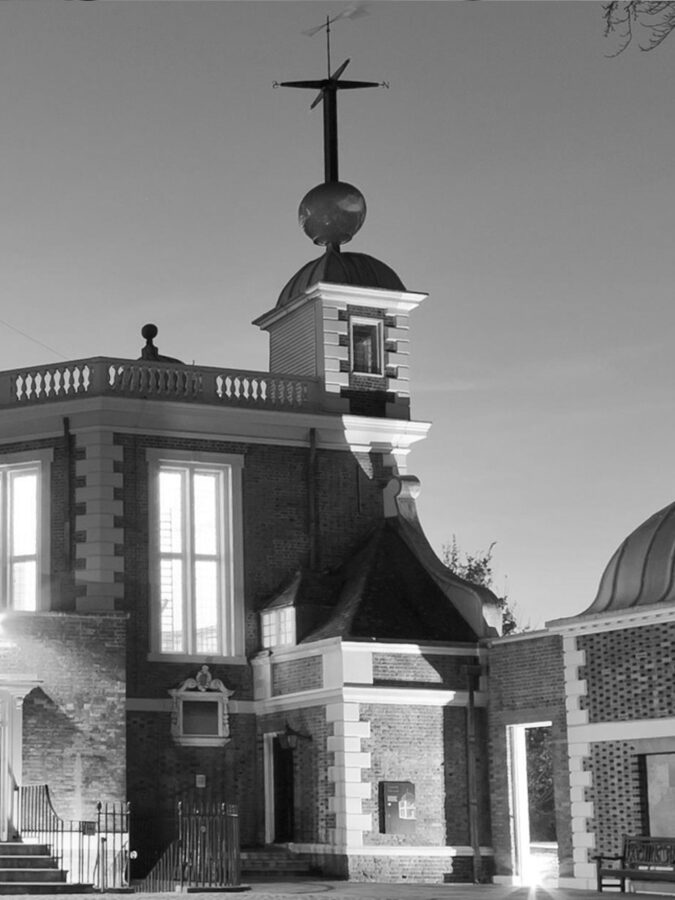
In 1884, an international conference established the Greenwich Meridian as the world’s Prime Meridian: longitude 0°. From this line, east and west could be measured from a common origin and global navigation and timekeeping increasingly organised around a shared geographical reference.
ZERO WEST
More than two centuries after Harrison, that same line gave Zero West its name. In 2015, the L1 Longitude became our first watch, connecting Harrison’s pursuit of precision, Greenwich and Zero Degrees West. The L3 and L4 continue the story with a new generation of British-designed mechanical timepieces.

03
L4 GALLERY






04
L4 SPECIFICATION
- Latitude and Longitude reference Greenwich and the main line of longitude
- Date code references when London was awarded the Prime Meridian, ‘Where time starts’
- White dial, roman numerals and blue hands are a contemporary nod to John Harrisons H4
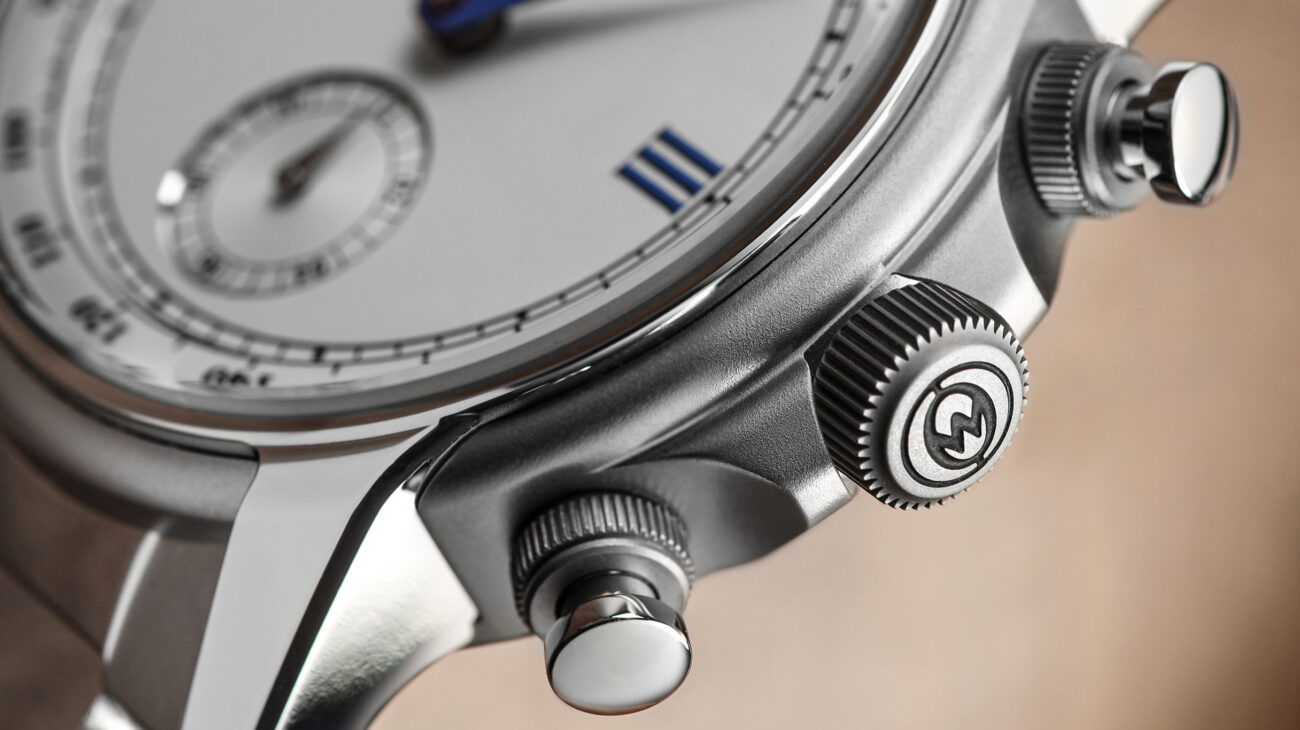
- Five-axis, aerospace grade 316L stainless steel machining
- Hand-assembled, regulated, and tested in-house
- 42mm diameter
- 13.7mm case thickness + crystal
- 22mm lug width
- 47mm lug to lug pin spacing
- 42mm diameter
- 13.7mm case thickness + crystal
- 22mm lug width
- 47mm lug to lug pin spacing
- Front: Deep‑dome, optically corrected sapphire with AR coating
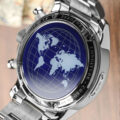
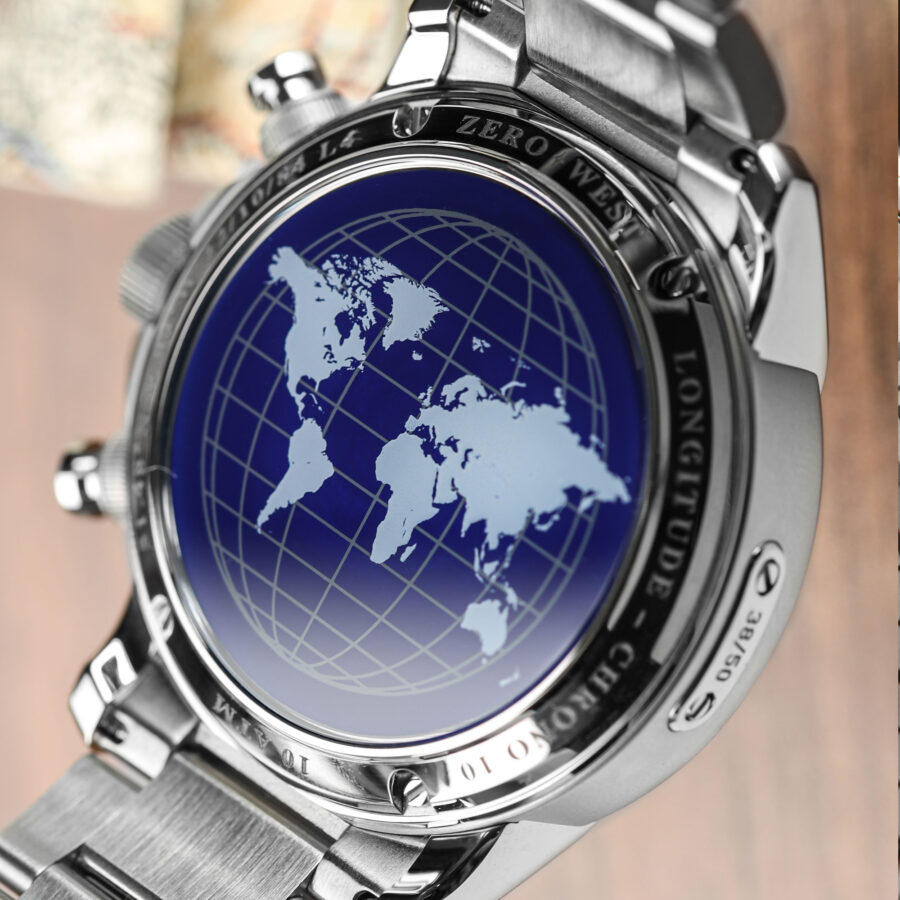
- Rear: Reverse printed globe graphic from the ‘Z Branch’ workshop
- Sellita Top Premium SW500BVc (automatic chronograph)
- In house regulated
- 28,800vph
- 35 jewels
- Self-winding ball bearing rotor
- Power reserve ~62 hours
- Antique white with 2 recessed chronograph subdials and inset polished rings. Outer tachymeter with inner polished ring
- Overprinted roman numerals set within train track minute markers; Blue teardrop hour and minute hand with polished main sweep. Matching chrome seconds hands
-
Blue leather strap 22/20mm. Handmade with the finest Italian leather and hypoallergenic lined. Zero West engraved polished pin buckle. Available in standard size 175mm-220mm
05
Order the L4 Longitude
S6e Spitfire Escape
TIME TO GO FURTHER – Crafted for the miles, refined for the moment. This chronograph pairs dress-worthy lines with uncompromising build, then confirms it with in-house Chrono10 certification. From first meetings to last flights, it keeps your time precise, composed, and always on pace.
£3,490.00
Delivery within 4 Weeks
Free Delivery
Delivery within 4 Weeks
Includes all import-duty and local taxes. No additional fees.
Delivery within 4 Weeks
Excludes local taxes & duties. Learn More

BUILT TO ORDER

BRITISH ENGINEERING


30 DAY RETURNS

2 YEAR WARRANTY